Classrooms and learning spaces
Desks, tables, chairs, shelving, floors and the touchpoints children use constantly: door handles, light switches, cubbies and shared equipment.
Serving Omaha, Nebraska & surrounding areas
Mon–Fri 8am–6pm · Sat 9am–2pm
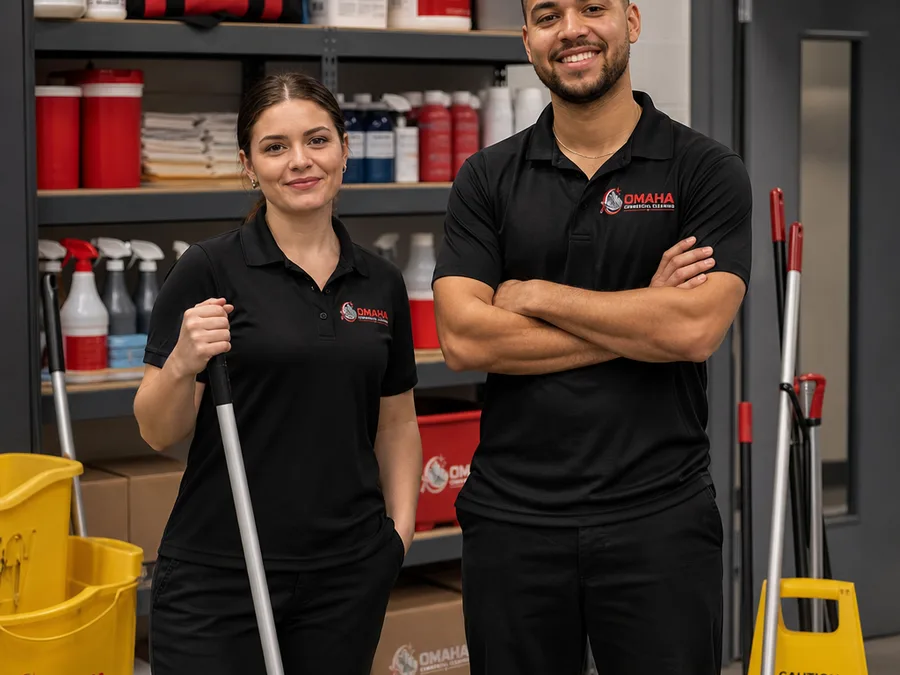
Classroom, restroom and common area cleaning with child-safe products and disinfection where it actually matters.
Children touch everything, put things in their mouths, sit on floors and share every surface in the room. That makes schools and daycares the environments where cleaning most directly affects health outcomes, and where a single missed week shows up as absence rates. It also means product choice matters more than anywhere else, because residue on a surface a toddler will chew is a genuine concern rather than a theoretical one.
The work is also constrained by occupancy. Classrooms are in use all day, so cleaning happens after hours or during breaks, and anything requiring ventilation or drying time has to be scheduled where children will not be present. Daycares in particular run long days, which compresses the available window.
We work with schools, preschools, daycare centers and after-school programs across the Omaha area. Staff working in these facilities are background-checked, which most centers require by policy and every parent expects.
Desks, tables, chairs, shelving, floors and the touchpoints children use constantly: door handles, light switches, cubbies and shared equipment.
Restrooms cleaned with attention to the surfaces children actually contact, which are lower than adult-height cleaning habits assume. Fixtures, partitions, floors and dispensers.
Tables, seating, floors and serving surfaces, with food area standards applied where meals are prepared or served on site.
Floors, mats, low surfaces and equipment that gets handled all day. Soft surfaces and toy sanitizing are scoped explicitly, since centers vary in what they want us handling.
Administrative areas, staff break rooms, corridors, entryways and the lobby areas where parents form their impression of the center.
Age group changes the priorities substantially.
Infant and toddler rooms: The highest standard. Floors are a primary surface because children are on them constantly, and everything within reach is a touchpoint. Product residue is a real concern, so chemistry is chosen accordingly.
Preschool and early learning: Shared toys, activity tables and floor areas dominate. Touchpoint disinfection frequency matters more than appearance, particularly during illness season.
Elementary schools: Classroom volume and shared restrooms. Desks, door handles and cafeteria surfaces carry the most transmission risk, and consistency across many rooms is the operational challenge.
Middle and high schools: Larger footprints with locker areas, gyms and science or shop rooms that have their own requirements. Restroom volume and floor care take more of the budget.
After-school and enrichment programs: Often sharing space with other users, which means cleaning between groups on a tight schedule and clear boundaries about which areas are covered.
Illness season from late autumn through winter changes the plan. Most Omaha centers increase touchpoint disinfection frequency from November onward, and it is worth agreeing that seasonal shift in advance rather than reacting to an outbreak.
School and daycare cleaning in Omaha typically runs about $0.10 to $0.28 per square foot per visit. A daycare center of 5,000 square feet cleaned five nights weekly commonly lands around $1,600 to $3,000 per month, while larger school facilities are usually quoted per building with separate provision for gyms, cafeterias and floor care.
Restroom count and classroom count drive the figure, along with disinfection frequency. Centers wanting daily touchpoint disinfection through illness season should budget for a seasonal increase rather than a flat annual rate, since the work genuinely differs.
We tour classrooms, restrooms, eating and play areas, and review licensing requirements, existing protocols and anything your inspections have flagged.
Products are confirmed as appropriate for child-occupied spaces, with documentation available for licensing reviews and for parents who ask.
Work is scheduled after hours or during breaks, with anything needing drying or ventilation time placed where children will not be present.
Crews are background-checked and briefed on your center's rules, including access, supervision expectations and areas that stay off limits.
Touchpoint disinfection frequency is planned to increase through illness season, agreed in advance so it is budgeted rather than negotiated mid-outbreak.
Products used in child-occupied spaces are selected for that environment, with attention to residue on surfaces children touch and mouth. Documentation is available for licensing reviews. If your center requires specific products or has restrictions, we work to your list rather than ours.
Yes. Anyone working in a school or childcare facility is screened, and we can provide documentation for your records. Most Omaha centers require this by policy and we treat it as non-negotiable regardless.
After hours or during scheduled breaks. Daycares with long operating days have a compressed window, so the schedule is built carefully and anything needing drying time is placed where children will not encounter it.
This is scoped explicitly rather than assumed, because centers differ. Some prefer their own staff handle toys under their licensing procedures, others want it included. Soft surfaces and fabric items need specific methods and are quoted separately.
Yes, and it is worth planning in advance. Increased touchpoint disinfection, more frequent restroom attention and focused work on shared surfaces can be scheduled seasonally or triggered by an outbreak. Agreeing the plan before flu season is easier than arranging it mid-crisis.
We work to your facility's licensing requirements, since the obligation sits with your license rather than with us. Share your requirements and any inspection findings, and we will write the scope to support them and document what we do.
Kitchen, dining room and back-of-house cleaning scheduled after close, built around health inspection…
Building-wide cleaning for property managers: lobbies, corridors, elevators, stairwells and tenant…
Cleaning for clinics, dental and specialty practices with documented disinfection protocols and correct…
Store and shopping center cleaning timed around trading hours, focused on entries, sales floors and the…
Cleaning for banks, credit unions and financial offices, run with security protocols, screened crews and…
Showroom, customer lounge and service department cleaning, handling both a polished sales floor and an…
Salon floors, treatment rooms and wash stations cleaned to the standard your state board inspection…
Equipment disinfection, locker rooms and studio floors, handling the moisture, sweat and odour that…
Ongoing janitorial contracts with an assigned crew, a written scope and managed supplies, so your…
Cleaning built around how offices actually run, from desk surfaces and conference rooms to the breakroom…
Strip and wax, burnishing, carpet extraction, tile and grout restoration, matched to the surface you…
Scheduled janitorial service for offices, retail and facilities across Omaha…
Tell us your center type, classroom count and licensing requirements. We will walk the facility and scope the work with product safety and scheduling planned properly.