
Entries, matting and entry glass
The highest-impact area in any store. Glass and door hardware cleaned of prints, matting managed and lifted for cleaning beneath, and entry flooring handled aggressively through salt season.
Serving Omaha, Nebraska & surrounding areas
Mon–Fri 8am–6pm · Sat 9am–2pm
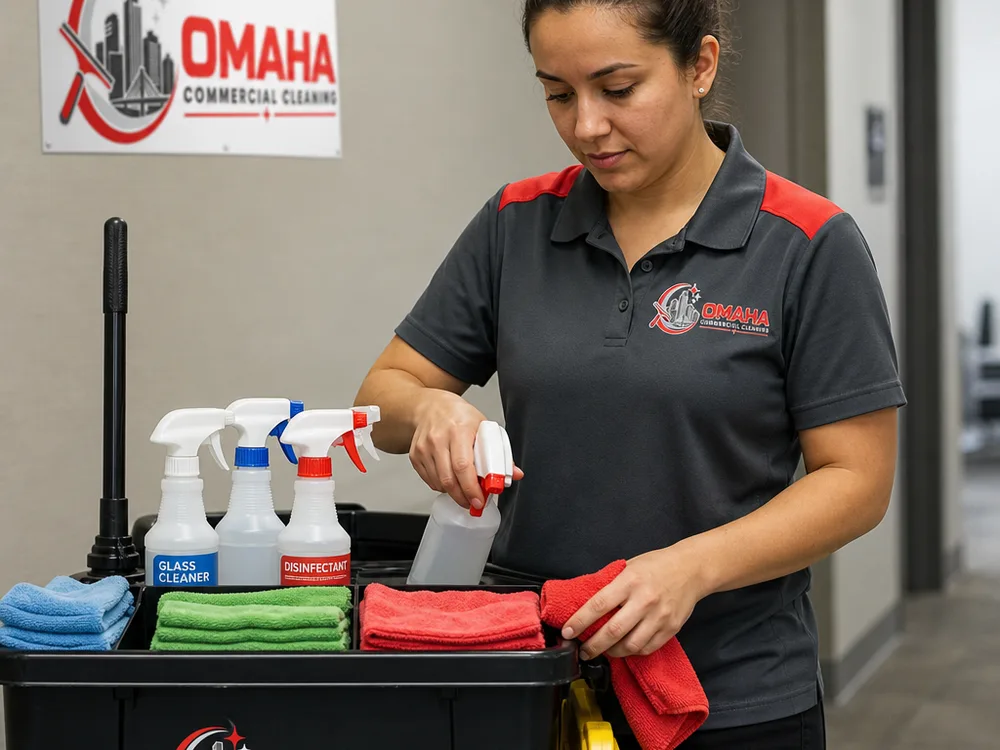
Store and shopping center cleaning timed around trading hours, focused on entries, sales floors and the details customers notice.
In retail, cleanliness is part of the product presentation. A customer forms an impression walking from the parking lot to the till, and the things that damage it are specific and consistent: smeared entry glass, gritty entry flooring, dusty low shelving, fingerprinted display cases and a fitting room with the previous customer's debris still on the floor. None of those are hard to fix, and all of them are routinely missed.
The operational constraint is trading hours. Most retail cleaning happens before opening or after close, in a fixed window, and it cannot leave wet floors or equipment where customers or staff will meet them. Shopping centers add a second layer, since common areas and individual tenant spaces have different owners and different schedules.
We clean stores and centers across the Omaha metro, including locations around Village Pointe, Oak View, Shadow Lake and the retail corridors along Dodge and 144th. Winter is the defining season here: salt and slush arrive on every customer's shoes and go straight onto your entry flooring.
The highest-impact area in any store. Glass and door hardware cleaned of prints, matting managed and lifted for cleaning beneath, and entry flooring handled aggressively through salt season.
Floors cleaned to the finish type, low shelving and fixture bases dusted, and display cases cleaned of the fingerprints that accumulate all day at customer height.
Mirrors, benches, hooks, floors and corners. Fitting rooms get judged closely and privately, and they are the area most likely to cost a sale when neglected.
Public restrooms held to a customer-facing standard, plus staff areas and break rooms that affect retention more than management usually expects.
Back areas that keep operations working: floors, aisles kept clear of debris, and receiving areas where packaging accumulates fast.
Concourses, food court seating, center restrooms, entrances and shared glass for center management, scheduled around trading and tenant hours.
What matters most changes considerably with format.
Apparel and specialty retail: Fitting rooms, mirrors and floor presentation carry the experience. Dust on low fixtures and shelving is highly visible against merchandise and is the most common miss.
Grocery and food retail: Floors dominate, with spill response, produce area debris and cart corrals. Health standards apply to prepared food areas and the scope needs to reflect that explicitly.
Big box and warehouse formats: Large floor plates need machine scrubbing rather than manual work. Entry areas and restrooms carry the customer impression across an otherwise utilitarian space.
Showrooms and furniture retail: Dust on display merchandise is the defining issue, and glass and hard surfaces need consistent attention. Slower foot traffic means dust, not soil, is the enemy.
Shopping center common areas: Concourse floors, seating, center restrooms and entrances, managed for center ownership around tenant trading hours and delivery schedules.
Convenience and fuel retail: Extended or continuous hours, heavy restroom traffic and outdoor areas. These sites need frequent restroom attention above everything else, since reviews are dominated by it.
Retail cleaning in Omaha typically runs about $0.07 to $0.18 per square foot per visit. A 4,000 square foot store cleaned five mornings a week commonly lands around $900 to $1,700 per month, while shopping center common area programs are quoted on the center's own footprint and usually run considerably higher.
Floor type and entry size matter most. Polished concrete and hard floors in large formats scrub efficiently by machine, while stores with mixed flooring and heavy fixture density need slower manual work. Restroom count and trading hours also shift the schedule and the price.
We visit while the store is open to see real conditions, then confirm what the space looks like at close, since those are two different problems.
The scope is ordered by what customers encounter first: entry, glass, floors, fitting rooms, restrooms. Back-of-house work is scheduled around those priorities.
Before-open or after-close windows agreed, with a hard finish time. Nothing wet or obstructive is left where staff or customers will meet it.
Winter entry management is planned in advance rather than reacted to, including matting, more frequent entry work and salt-appropriate floor care.
Scheduled check-ins with your store or center manager, since retail priorities shift with seasons, promotions and refits.
Yes, and most retail work runs that way. Crews typically work early mornings before opening or after close, finishing before staff arrive so nothing is wet or obstructed. The window is agreed up front and treated as a hard deadline.
Entry areas get heavier attention from November through March: matting managed and cleaned underneath, entry flooring worked more frequently, and floor care chosen to handle salt without damaging the finish. Salt film left through a season dulls hard floors and grinds into carpet permanently.
Glass display cases and fixture surfaces are normally included. We do not move, handle or clean merchandise itself, since that is a loss-prevention and merchandising matter for your staff. The boundary gets written into the scope.
Yes, for common areas: concourses, seating, center restrooms, entrances and shared glass, coordinated with center management around tenant hours. Individual tenant spaces are usually contracted separately, either through the center or directly with each store.
Routine cleaning happens outside trading, so daytime spills are normally handled by store staff. Stores that need daytime coverage can add day porter service, which is common in grocery, convenience and large formats.
Yes, on any apparel scope. Mirrors, benches, hooks, floors and corners, every visit. Fitting rooms are inspected closely by customers in private and they are a frequent source of complaints when treated as a low priority.
Kitchen, dining room and back-of-house cleaning scheduled after close, built around health inspection…
Building-wide cleaning for property managers: lobbies, corridors, elevators, stairwells and tenant…
Cleaning for clinics, dental and specialty practices with documented disinfection protocols and correct…
Classroom, restroom and common area cleaning with child-safe products and disinfection where it actually…
Cleaning for banks, credit unions and financial offices, run with security protocols, screened crews and…
Showroom, customer lounge and service department cleaning, handling both a polished sales floor and an…
Salon floors, treatment rooms and wash stations cleaned to the standard your state board inspection…
Equipment disinfection, locker rooms and studio floors, handling the moisture, sweat and odour that…
Ongoing janitorial contracts with an assigned crew, a written scope and managed supplies, so your…
Cleaning built around how offices actually run, from desk surfaces and conference rooms to the breakroom…
Strip and wax, burnishing, carpet extraction, tile and grout restoration, matched to the surface you…
Scheduled janitorial service for offices, retail and facilities across Omaha…
Tell us your square footage, trading hours and floor type. We will walk the store during trading and scope the work around your customer path.