Kitchen floors, drains and equipment surrounds
Degreasing floors, scrubbing grout, clearing floor drains and cleaning the sides and bases of cooking equipment where grease accumulates out of sight. This is the area inspections focus on first.
Serving Omaha, Nebraska & surrounding areas
Mon–Fri 8am–6pm · Sat 9am–2pm
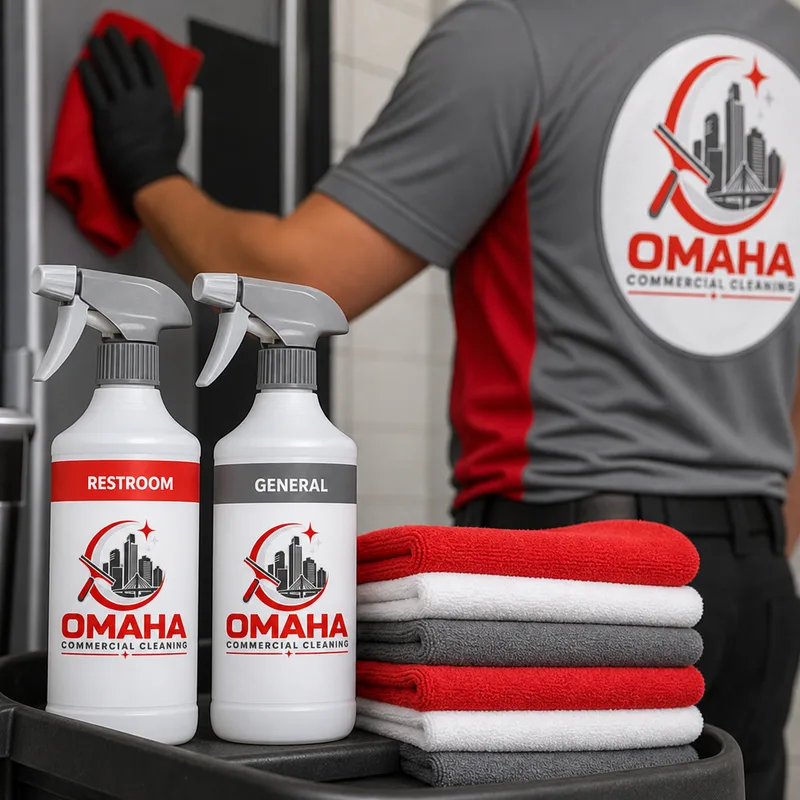
Kitchen, dining room and back-of-house cleaning scheduled after close, built around health inspection standards.
Restaurants carry a cleaning standard that other commercial buildings do not. A health inspector can arrive unannounced, and the areas they check first are rarely the ones customers see: floor drains, the space under the line, the sides of cooking equipment, walk-in shelving and the grease that collects where the wall meets the floor. Restaurant cleaning in Omaha works when it is organized around that inspection reality rather than around appearances.
The other constraint is time. Cleaning happens after close, in a compressed window, and it has to be finished before the opening crew arrives. That means a crew that knows the layout, works a fixed sequence and does not need supervision at one in the morning. Kitchens also need chemistry that is safe around food-contact surfaces, which rules out a lot of general-purpose product.
We work with restaurants across Omaha, from Old Market and Blackstone dining rooms to suburban locations along the 144th Street and Village Pointe corridors. Front-of-house presentation and back-of-house compliance get separate task lists, because they fail in different ways.
Degreasing floors, scrubbing grout, clearing floor drains and cleaning the sides and bases of cooking equipment where grease accumulates out of sight. This is the area inspections focus on first.
Tables, chair bases, booth seams, floors, entry glass, host stand and the ledges and baseboards that get missed during a quick close-down by tired staff.
Restaurant restrooms are judged harshly and reviewed publicly. Fixtures, floors, grout, mirrors, dispensers and the base of every toilet, cleaned nightly rather than wiped.
Prep areas, dish pit, walk-in exteriors and shelving, dry storage floors and the corners where spills dry unnoticed and attract pests.
Surfaces around hoods and cook lines degreased on a schedule. Full hood and duct cleaning is certified work handled by a specialist, and we tell you when that is what you need.
Knowing where scores get lost makes the nightly scope far more useful than a generic checklist.
Floor drains and the surrounding floor: Organic buildup in drains produces odour and attracts flies. Drains need scrubbing rather than rinsing, and the floor around them needs degreasing on a schedule.
Under and behind equipment: Grease and food debris collect under the line, behind fryers and beside prep tables. Equipment cannot be moved nightly, but a rotating schedule reaches everything across a week.
Wall and floor junctions: Coving and baseboards in kitchens hold grease film that hardens over time. Once it sets it needs mechanical work, which is why regular attention is cheaper.
Walk-in cooler shelving and floors: Spills freeze and get overlooked. Shelving needs periodic full cleaning, and cooler floors need attention that fits the temperature.
Ice machines and beverage stations: Exterior surfaces, drip trays and the surrounding floor. Interior sanitizing of ice machines follows the manufacturer's procedure and is usually scheduled separately.
Restroom detail: Grout, the base of fixtures, partition hardware and dispenser interiors. Public reviews mention restrooms constantly, which makes this commercially significant as well as regulatory.
Restaurant cleaning in Omaha commonly runs about $250 to $900 per week for nightly service, depending on square footage, kitchen size and how much of the close-down your own staff handle. A small cafe with a compact kitchen may sit near $200 to $350 weekly, while a full-service restaurant with a large line and multiple restrooms runs considerably higher.
Kitchen square footage drives the number more than dining room size, because degreasing is slow work. Whether your staff handle nightly close-down with us doing detail work, or we handle the full clean, makes a substantial difference to the quote.
We visit after close to see the space as our crew will find it, note kitchen layout, equipment and drains, and ask about recent inspection findings.
We agree exactly what your close-down team handles and what we do, so nothing falls between the two. This is where most restaurant cleaning contracts go wrong.
Products confirmed as appropriate around food-contact surfaces, with storage and labelling handled to keep your own compliance straightforward.
Keys, alarm, lock-up and what time the crew must be finished. Restaurant work runs on a hard deadline and the schedule has to be realistic.
Weekly and monthly items such as behind-equipment work and walk-in shelving are rotated across the month so everything is covered without extending nightly hours.
We degrease surfaces around hoods and cook lines as part of routine cleaning. Full hood and duct cleaning is certified work with its own inspection requirements and fire code implications, so it needs a specialist contractor. We will tell you plainly when that is what your kitchen needs rather than doing a partial job.
Yes, and most restaurant work runs that way. Crews commonly start between eleven at night and two in the morning, finishing before the opening team arrives. The exact window is agreed up front because the deadline is not flexible.
Yes. Kitchen work uses products appropriate for food service environments, applied with correct procedures for food-contact surfaces. Product documentation is available for your records, which also helps if an inspector asks.
Most restaurants split it: your team handles immediate close-down such as surfaces, dishes and initial floor work, and we handle detailed cleaning, degreasing, restrooms and the rotating deep-clean items. The split gets written down so both sides know the boundary.
Yes. A pre-inspection deep clean focused on drains, equipment surrounds, wall junctions and storage areas is a common request. If you have had recent findings, share them and we will scope directly against those items.
No. Grease trap pumping and disposal is licensed waste work with specific disposal requirements. We clean the surrounding area and will refer you to a licensed provider for the trap itself.
Building-wide cleaning for property managers: lobbies, corridors, elevators, stairwells and tenant…
Cleaning for clinics, dental and specialty practices with documented disinfection protocols and correct…
Store and shopping center cleaning timed around trading hours, focused on entries, sales floors and the…
Classroom, restroom and common area cleaning with child-safe products and disinfection where it actually…
Cleaning for banks, credit unions and financial offices, run with security protocols, screened crews and…
Showroom, customer lounge and service department cleaning, handling both a polished sales floor and an…
Salon floors, treatment rooms and wash stations cleaned to the standard your state board inspection…
Equipment disinfection, locker rooms and studio floors, handling the moisture, sweat and odour that…
Ongoing janitorial contracts with an assigned crew, a written scope and managed supplies, so your…
Cleaning built around how offices actually run, from desk surfaces and conference rooms to the breakroom…
Strip and wax, burnishing, carpet extraction, tile and grout restoration, matched to the surface you…
Scheduled janitorial service for offices, retail and facilities across Omaha…
Tell us your kitchen size, service hours and what your closing staff already handle. We will walk the space after close and scope the split clearly.